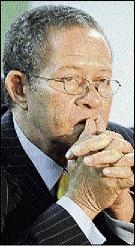
Golding
My fellow Jamaicans:
The public anger that has arisen since the announcement of new taxes last Thursday is understandable and I sympathise with the Jamaican people. The worldwide recession has hit us badly and I know that many Jamaicans are having it hard. In these difficult times, no one would want to impose additional taxes if there was a way it could be avoided.
On Sunday, I announced that the Government would re-examine the tax package that was presented to see how it could be redesigned to lessen the impact, especially on the poor and low-income families. On Monday, Minister Shaw and I held a telephone conference with the International Monetary Fund (IMF) officials and advised them that the tax package would have to be overhauled. This evening, I will give you the details of the changes that we have agreed to make.
It is important that we understand the situation that the country is in and how we got there. As I told Parliament on Thursday, for many years we have been spending much more than the taxes we collect. Each year we borrow to make up the difference and each succeeding year we have been forced to borrow more and more to meet our expenditures and service the debt. For the last 10 years, all the taxes we collected have not even been sufficient to service our debt.
When the global crisis hit us, some of the revenue that we so desperately need disappeared, like what we earn from bauxite, GCT, customs and income tax, so we have had to borrow even more to fill that gap ...
... The tax package announced last Thursday was designed to raise $21.8 billion. That is the amount required to satisfy the Medium Term Economic Programme we have submitted to the IMF. Without that additional revenue, there will be no IMF programme. I want you to understand what this would mean. Without the money from the IMF, the exchange rate would come under severe pressure because with the fallout in bauxite and alumina earnings, remittances and other inflows, we would have difficulty in meeting the demand for foreign exchange.
Without an IMF agreement, the additional funds from the World Bank and the Inter-American Development Bank which we need to support the budget would not be forthcoming. We have to find this $21.8 billion of additional revenue. That is the stark reality.
How the tax package was conceived
Let me say something about the tax package that was presented and how it was conceived.
The reform of our tax system has been under review for some years. In 2003, the then government appointed a Tax Policy Review Committee to recommend changes to the tax system. One of the recommendations of that committee was the broadening of the GCT to include as wide a range of goods and services as possible. Let me quote from that report. It says:
"The revenue productivity and fairness of the GCT would be addressed by eliminating all non-export zero rates other than those required by international convention together with a significant amount of the exemption list."
It further recommended that with the broadening of the GCT base, a portion of the additional revenue should be allocated to expand the social safety net programmes to target assistance to those most in need.
The tax package, as presented last Thursday, was in keeping with those recommendations. The response from the people of Jamaica has been loud and profound.
I want to commend the people of Jamaica because, despite the strong opposition to the measures announced last Thursday, the country was not shut down; there has been no disruption, no violent demonstrations. This government does not have to await an eruption to recognise that it has to change course. We have listened and we have heard. We must respond.
Having re-examined the tax proposals, the Cabinet, on the recommendation of the minister of finance, has decided on the following:
All the exempt items, except electricity that were scheduled to be brought under GCT will continue to be exempt. i.e., no tax will be charged on them. These include foodstuff such as vegetables, ground provisions, flour, wheat, cornmeal, bread, buns, bullas, crackers, sugar, oats, eggs, cooking oil, condensed and powdered milk, pickled mackerel, sardines, corned beef, syrups, noodle soups and patties. Other items that will remain free of GCT include animal feeds, fishing gear, fuel sold to fishermen, solar water heater, sanitary napkins, disposable diapers, orthopaedic apparatus, including wheelchairs, white canes for the blind and all other aids used by disabled persons, sports equipment and furnishings for churches.
Construction services and funeral expenses up to $100,000 will also continue to be free of GCT. The full list of these items which will continue to attract no GCT will be published by the minister of finance tomorrow.
These measures were expected to yield $6.2 billion, which will now have to be found elsewhere.
The ad valorem tax of 15 per cent on petroleum will remain as announced. As already indicated, this is expected to yield $9.4 billion. Taxi operators are due an increase in taxi fares based on the recommendation of the OUR, and the minister of transport and works will shortly be announcing the new fares.
The increase in the GCT rate to 17.5 per cent will remain as announced, and is expected to yield $3.6 billion.
The increase in the SCT on cigarettes will remain as announced, and will yield $1.4 billion.
The tourism sector currently enjoys a special 50 per cent GCT rate. This will now be fixed at 10 per cent as of April 1, 2010. This is expected to yield $1.2 billion.
Last Thursday, we announced that GCT at the new standard rate of 17.5 per cent would be applied to that portion of electricity for residential customers that exceeds 200 kwh per month. We have decided to reduce that to a special GCT rate of 10 per cent.
There are approximately 492,000 residential customers whose accounts are active. More than 386,000 of them, i.e,. over 78 per cent, use less than 200 kwh per month and, therefore, they will not have to pay any GCT on their light bills. 105,000, i.e., the top 22 per cent of residential customers who use more than 200 kwh per month, some of them as much as 4,000 kwh, will now be required to pay 10 per cent GCT on whatever electricity they use in excess of 200 kwh each month. They can save on their bills by conserving, by cutting back on the amount of electricity they use and reducing the amount of oil we have to import.
This measure was originally expected to yield $1.2 billion, but with the reduction of the rate to 10 per cent it will now yield $711 million.
In revising the tax package, we took into consideration that as much as a third of those who should be paying GCT are not doing so. While we work towards improving the rate of compliance, a way must be found to get some taxes from those tax dodgers.
Accordingly, the following new measures will be introduced:
10 per cent GCT will also be applied to electricity for commercial and industrial customers. This should not have any significant impact on those who are GCT-compliant, since they will be able to deduct it from their monthly GCT returns and, therefore, it should not result in increased prices. It is those who are not filing GCT returns who will now have to pay something through the 10 per cent GCT that they will now be charged on electricity. This is expected to yield $742 million. Government accounts, such as government offices, government agencies, schools, hospitals and clinics, will be exempt. A special waiver will be provided for private hospitals and schools which are exempt from GCT and would not be able to claim it back.
Importers pay GCT on the goods they import. When they sell those goods they charge GCT which should be paid over to the government minus the GCT they paid at customs. Many of them are pocketing the GCT and not paying it over to the Government. Until we can bring them into the GCT net, we must collect something from them. We will, therefore, be introducing a five per cent Advanced GCT Payment on all taxable goods imported. Those importers who file their GCT returns will be able to deduct it from their GCT payments so it will have no impact on them or the prices they charge. Those who do not file their GCT returns will, however, be forced to pay something towards the revenues. This measure is expected to yield $2.9 billion.
Advanced GCT Payment
This Advanced GCT Payment will not apply to petroleum and capital goods, manufacturers who already enjoy deferment of GCT payments, goods that are zero-rated or exempt from GCT, or ICIs who now pay an uplift charge in lieu of GCT.
One of the concerns that have been expressed is the need to share the burden of the new taxes more equitably. To him that more is given, more must be expected. This is a sound argument.
The suggestion has been made that since the banks are making such huge profits from the high interest rates they enjoy on government paper, we should impose a special tax on them. We have chosen not to do that for two compelling reasons:
First, a critical part of our strategy going forward is to reduce government expenditure. The biggest single item of government expenditure is the cost of interest. This year our interest payments amount to $175 billion.
We are near completion of a plan that will see a substantial reduction of the interest charges that the government has to pay on the instruments that are held by the banks. To impose a tax on that interest at this time would jeopardise the success of that plan. What we are expecting to save on the interest payments that government has to make is way above what we would get from any special tax on them. We cannot afford to be penny wise and pound foolish.
Second, another critical part of our strategy going forward is a significant reduction in interest rates. This will lead to reduced production costs that will make us more competitive and reduced prices that will benefit consumers. Reducing interest rates is necessary to support businesses, encourage new investments and job creation. As we look toward the end of the recession, we have to position our interest rate policy to enable new economic activity to take off especially for micro, small and medium-sized enterprises. If interest rates remain high, businesses will still be held back even after the recession has passed.
Getting some more money out of the banks to help us to pay the high interest charges while keeping the interest rates high may help the Government to meet its bills. It will not help the small businessman who wants to do something that would create some more jobs but cannot do so if those interest rates remain high.
The Bank of Jamaica has signaled the direction in which we are going. Last Friday, it reduced its Treasury bill rate to 15 per cent, coming down from a high of almost 22 per cent in January. We intend to reduce it even further. But that would not relieve us of the burden of high interest rates on the substantial portion of our debt which is at fixed rates that are as high as 24 per cent. That is what we are working to address and we expect to conclude those arrangements very shortly.
The principle of sharing the burden more proportionately, more equitably, as I have said, is a sound argument. Accordingly, the following additional measures will be introduced:
The personal income tax rate will be increased to 27.5 per cent on all income above the threshold for persons earning in excess of $5 million and 35 per cent for persons earning in excess of $10 million. In other words, persons earning up to $5 million will continue to pay the existing rate of 25 per cent. Those earning more than $5 million will be charged an additional 2.5 per cent on their taxable income and those earning more than $10 million an additional 10 per cent on their taxable income. This is a temporary measure and will apply from January 1, 2010 to March 31, 2011. This will yield an additional $1.317 billion.
As was already announced, the income tax threshold will be increased to $441,168 effective January 1, 2010. This means that the tax-free threshold would have more than doubled within the last year.
Motor vehicle licences for luxury vehicles with an engine capacity of 3000 cc and above will be increased by $4,000 per annum.
Additional tax rates ranging between 20 per cent and 25 per cent will be applied to certain luxury goods, such as jewellery, television sets exceeding 32 inches, shotguns and shotgun cartridges, jet skis and pleasure boats
These two measures will yield an additional $542 million.
Medium-Term Economic Programme
This revised tax package will meet the revenue requirements of our Medium-Term Economic Programme. We have worked hard to minimise as much as possible the impact on the ordinary Jamaican, on poor families who struggle every day to feed their children and send them to school and on middle-class families who also struggle to make ends meet.
It is only one part of our strategy going forward. There is a range of initiatives that we are taking to stimulate the economy, creating a macroeconomic environment that will encourage investment and expansion and facilitating specific projects that will create new jobs and have a significant impact on the economy ...