Chilled premium juices are under assault from rivals whose 'juice drinks' are cheaper, and gaining ground in the beverage market.
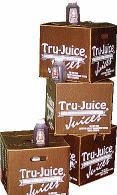
But, Trade Winds Citrus Limited, makers of Tru Juice, are attempting a pushback, even as it tries to contain rising production costs by invoking its products as real Jamaican.
Richard Groves, a director of Trade Winds, said Wednesday that the increases were driven by the rising price of sugar, energy, the depreciating dollar, the cost of plastics for bottles and other inputs.
A 475 ml bottle of Tru Juice orange juice now retails for about $100, up from $80 in October, tax included, Groves said, tracking with quotations from grocers.
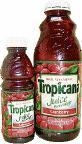
But Pepsi Jamaica, which distributes rival beverages Toma and Tropicana drinks, says its products are at $60 and below, and is laying claim to double-digit volume sales growth because its products are cheaper.
Pepsi Jamaica carries 18 brands of juices, sodas and water in its portfolio.
Tropicana, which, like Tru Juice, is channelled through grocery outlets and food establishments, has had double-digit growth so far in 2009, says Pepsi Jamaica's Brand Manager Ayanna Kirton, while Toma's is single-digit.
"We feel that this is indeed related to the price of both products," said Kirton.
Toma retails at $50 while Tropicana is sold for about $60, depending on the outlet, with all drinks performing "surprisingly well", the brand manager said, and could improve further in the Yuletide season.
Cautiously optimistic
"Traditionally, the Christmas holidays have been good to us so we are cautiously optimistic. However, we know that the purchasing power of consumers is considerably lower this year because of the global crisis, so we are bracing ourselves to see what this year will bring."
Kirton said, while she did not have the market data at her finger tips, indications were that Pepsi has made serious gains in the orange juice market, this year.
"We know that this is a function of the affordability of the products we sell. Due to the difference in price, persons who cannot afford to buy 100 per cent juices opt for products with lower juice content."
Trade Winds' boss Peter McConnell said Thursday that his company has not increased its ex-factory prices, suggesting that any adjustments is at the retail end.
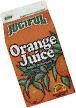
But Jamaica Citrus Growers Limited, makers of Juciful, said it has raised prices more than once.
"We adjusted our prices by 15 per cent in more than one tranchesince January 2009," said Marketing Manager Owen Flowers, saying the increases were pushed by "rising cost of packaging, electricity and water - everything."
"Since the last adjustment, we have had further movement in costs and the industry is clamouring now for another increase," he added.
Trade Winds lays claim to 70 per cent of the chilled orange juice market. A 'buy true Jamaica orange juice' campaign launched Decem-ber 6, suggests it is intent on clawing back whatever ground it might have ceded to competitors, though the company is downplaying it as such.
"Our sales have not fallen, but there is an increased amount of non-Jamaican juices coming into Jamaica and I felt it was important to sensitise the Jamaican public that products are 100 per cent oranges coming from Jamaican farmers," said McConnell.
Jamaica Citrus Growers Limited, makers of Juciful, says its sales of 'premium, no sugar added' orange juice, have doubled between November 2008 and November 2009 - an outcome it attributes partly to a more aggressive distribution programme.
Premium product
"We have tried to be in a lot more places. We have had to exert a lot of effort," said Flowers.
"The market, however, likes a premium product and as long as people know of it, they will buy."
Flowers said Jamaica Citrus and Trade Winds together buy fresh produce from some 5,000 local farmers.
Trade Winds, whose main operations are in Bog Walk, St Catherine, in a full-page advertise-ment declared that it was unfair for competitors to sell to consumers claiming that their product was 100 per cent Jamaican when it was, in fact, made from imported raw materials.
McConnell told the Financial Gleaner that the campaign was merely to promote Jamaican products, saying the Citrus Growers Association is left sitting on fruit concentrate while drink-makers buy inputs from overseas.
"We are the only juice in Jamaica that (comes) from our own trees into our own bottles. We also buy fruit from farmers, so we are supporting local farmers by buying local products and putting in juice on the shelves," he said.
"I am happy for healthy and fair competition, but the facts need to be straight — their product is not a Jamaican product."
In November, the growers had approximately 156,000 gallons of orange concentrate in storage after a bumper 2009 crop, but few takers, McConnell said.
On Thursday, however, came the promise of relief with an announcement from the Office of the Prime Minister that the Cabinet had approved a new policy to purchase some of the concentrate for the School Feeding Programme run by the Ministry of Education.
McConnell is peeved that, instead of purchasing the fruit from local farmers, some in the beverage sector are importing from South America, and even as far away as Russia.
He refused to name the competitor targeted by his buy Jamaica ad, but said, "their product is made in Belize and imported from Belize frozen. It's coming from Belize, pre-packaged in Belize."
avia.collinder@gleanerjm.com