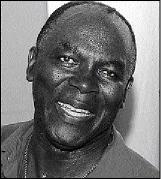
Ford
The Editor, Sir:
The art of forensic science is a very demanding one and generally the conclusions to be drawn are more certain with experience. You never stop learning until the day you die. Nonetheless, as in everything, there are certain reasonable conclusions to be drawn and inferences made, from materials produced during the conduct of a forensic examination.
The layman may well feel that it is 'common sense' that prevails in many instances - but this is not necessarily so; indeed what may seem obvious, on analysis, may prove to be very wrong indeed. Examples abound - in the case of five athletes, who may have taken stimulants, if, as it has been shown, the biochemical pathway for the allegedly ingested chemicals could not produce the laboratory derivatives as found, then any panel of reasonable people can only come to one conclusion; even if the management of the case afterwards are obscured by legalisms.
Similarly if chromatographic analysis shows petrochemical derivatives at the site of an accelerant, then no amount of argument can deny that fact, unless the analysis was not properly conducted.
Scientific fact
Similarly, if a person is choked to death in a hotel room, then the possibility of suicide can be eliminated for the most part, on forensic examination, if the analysis was properly conducted.
The practice of law requires certain "on one hand" and "on the other hand" and "on yet another hand" legalisms; not so science; but it is the analyses of scientific fact that lends itself to different conclusions.
Specifically in reference to you letter of the day on fire investigations (September 8) - it is not for the scientist to determine if the 23 'ladies'; wards of the state could transport igniters and accelerants to their dormitories. It is instead the job of the scientist to give opinion if the pattern that was raised in their burning could have resulted in the substances and patterns found in the fire debris.
The one thing that has come out of the Armadale enquiry so far, is the abysmal state of the facilities of the Correctional Department. These poor men and women of the correctional services, long seen as the lower echelons of the national security forces have had to endure conditions that are stark, making do with very limited or non-existent resources.
Please let us allow the enquiry to proceed without side comments that may never be borne out in the long term and it is only at the end that we should dissect the findings, as we carry out the search for truth.
I am, etc.,
Dr JEPHTHAH FORD
jephthahford@hotmail.com
Kingston 19