SO, WITHIN a few days, two political parties —the National Democratic Movement (NDM) and the Jamaica Labour Party (JLP), each of which has been led by the person who now holds the reins of power - are to contest a parliamentary seat in a by-election in the constituency of Clarendon, North Western. Who would have been bold enough to predict such an eventuality - Prime Minister Golding riding two horses, and in opposite directions?
The standard bearer for the Jamaica Labour Party in the upcoming exercise on September 4 has twice contested the seat on the NDM ticket - in 1997 and 2002. He ran on the JLP ticket in 2007 and will now make it two times for each of the parties. This might be the first time that he was eligible to be nominated. He should perhaps move swiftly to advise us as to whether this is so.
This comes two years, almost to the day, since the last general elections (this is how the third year will begin) and, though some would say otherwise, others are firm in their view that such a prospect fairly sums up the kind of leadership that has been provided for the people of Jamaica during these past 24 months: say one thing and do another.
For, who can forget the lofty sayings of the present prime minister when he was at the head of the NDM: when power has come to us through the ballot box, we pledge to place that power in the hands of the people, where it rightly belongs? Where is, then, the promised concerted effort towards cooperation and consensus building?
Who can forget: too much power is concentrated in the hands of the prime minister - the constant refrain of the present prime minister when he led the NDM and the parliamentary opposition? Significantly, there was neither any pledge in the JLP 2007 Manifesto to do anything about "such an undemocratic reality", nor has Golding done anything to disturb that "reality", since assuming the position of prime minister.
Vasciannie
constitutional arrangements
Who can forget: Jamaica's constitutional arrangements need to be reformed to accommodate a more democratic approach to governance? That was the core reason given by Golding in 1995 for leaving the JLP to form "a new and different party", the NDM. He subscribed, he said, to an executive presidential form of government, with the head of state being elected directly by the people, and not one with a ceremonial president as the head of state.
But, consider this: he returned to the JLP and became its leader, to have as the very first pledge in its 2007 Manifesto to "take steps to amend the Constitution to replace the Queen with a Jamaican President who symbolises the unity of the nation. Such a President will be appointed by consensus through a two-thirds majority vote in each House of Parliament". In other words, a ceremonial type of presidency, the very position arrived at by the Joint Select Committee of Parliament on Constitutional and Electoral Reform in its 1995 Report, and to which he took the strongest exception possible. Say one thing and do another.
distasteful treatment
In any assessment of its journey during the past two years, it is always going to be difficult, if not impossible, for the present administration to escape being defined by the prime minister's utterly distasteful treatment of the Public Service Commission within weeks of assuming the position. Sure, he had already earlier broken his campaign pledge concerning the size of his Cabinet; but it was the way he chose to deal with those exemplary sons and daughters of Jamaica, as his first real act of governance, that sent shivers down the spine of every public servant, their families and acquaintances, and signalled the souring of relationships between state functionaries and the political directorate.
For, if persons at the pinnacle of those state entities could be so summarily dismissed on spurious charges of 'misbehaviour', a course which came to involve the head of state and the courts, no less, how were 'lesser mortals' in the public service to regard their tenure?
And, how are we to forget the several unfortunate offshoots of that wholly forgettable affair, lasting up until this very moment in time? In the first place, the prime minister was strongly exhorted not to take that road. Powerful cautionary misgivings were expressed by a former prime minister, by the leader of the opposition and by almost every commentator, barring the few who have seen themselves as duty bound to give their blessing to his every act, regardless of how dangerous or absurd such act might be.
Is there any wonder, therefore, at the game of musical chairs that has come to consume the upper echelons of the civil service, including at the level of permanent secretaries? The public service commission that was put in place consequent on the dismissal of the former members has not been, is not now, and will never be, able to command the respect and confidence that is required for the smooth and effective carrying out of its signally important functions. It is seen by so many as having come into being through a polluted channel, with its required independence having been seriously dented and the prime minister's Damoclean sword of dismissal suspended over their heads menacingly.
good governance
It is not as if the sensitive nature of the work of that commission was lost on the framers of the JLP Manifesto 2007, for, under the caption 'A framework for good governance', there is the pledge: "Require that appointment to sensitive posts that are critical to the delivery of good governance be approved by a two-thirds majority vote in each House of Parliament thereby requiring consensus between the government and the opposition. These include the public service commission".
Of course, like the other constitutional issues which the prime minister, in former times, had the sustained habit of highlighting, this pledge has taken a silent back seat. Constitutional reform, lest we forget, were words that flowed from his lips on a daily basis; it was projected as the signature of any administration that might come to be led by him, for he maintained that such reform was at the heart of the kind of Jamaica that he wished to assist in fashioning. Say one thing and do another.
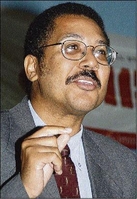
The real body blow that was delivered to the system by the Public Service Commission affair stemmed from the lengths to which the prime minister was prepared to go to deal with a personal vendetta against Professor Stephen Vasciannie, coincidentally, his erstwhile colleague in the NDM. It clearly did not appear to be of any concern to him that the Solicitor General's chambers, whose mandate is to render legal advice to all government ministries, departments and agencies, would thereafter come under a severe cloud since a transparent route laid down in the constitution was being stubbornly bypassed.
giant shadow
That episode caused a giant shadow to be cast over the Golding administration; it threatens to be the template, the yardstick, by which his tenure might ultimately come to be judged, and no one, least of all the leader himself, could complain if their performance during the first two years is graded against that background. For, it spoke to the approach that the prime minister was willing to take in the exercise of his constitutional functions, and to the business of governance.
This business of governance, particularly, in times of stress, requires action to be put to the words of our head of government when he spoke on the night of the general elections two years ago, and at his swearing-in ceremony at King's House some days later.
The route embraced by him in the earliest days of his tenure has given rise to teachers being branded and labelled as extortionists; policemen being referred to as demanding their pound of flesh; and the public announcement of a wage freeze during ongoing salary negotiations.
The prime minister, in his contribution to the last Budget debate, signalled a wish for a conversation on the business of governance. It is a conversation that is urgently required throughout the entire society, but in no sector more so than in the power corridors of the administration, with the words of the prime minister at his swearing-in ceremony as the centrepiece.
The giant shadow remains, and it is thickening. Some have exhorted the prime minister to be the 'chief mobiliser' in the effort to create meaningful public understanding of the daunting economic landscape, what it portends for family and individual fortunes, and what is the national programme, including that of shared sacrifice, to engineer Jamaica's escape.
The giant shadow created by him will make that a hard row to hoe. In all likelihood, he will need to employ the enormous skills of Houdini, but he must set about dismounting after the North West Clarendon by-election, for there has to be a change of course on his part, which cannot come soon enough.
A. J. Nicholson is the Opposition Spokesman on Justice. He may be reached at columns@gleanerjm.com