
BOTH political parties introduced ambitious manifestos when they contested the general election in 2007. The two-year mark thus gives an opportunity to assess how well the Golding administration has met its targets so far. While some progress has been made on some indicators, on several of the manifesto's priorities progress has been slow or negligible.
On Track
Only one of the Jamaica Labour Party's (JLP) macroeconomic objectives appears to be more or less on track: the Government's plans to modernise the customs system. To date, the Department of Customs has increased the number of customs officers at the ports, begun inspecting goods before brokers arrive to clear them, installed scanners in the baggage halls at both international airports, linked computers to the Immigration Department, and opened a new Import-Export Inspection Centre that will operate as a 'one-stop shop', housing all the regulatory agencies.
Moderate progress
Meanwhile, some amount of progress seems to be coming from efforts to reform the tax system. Some long-overdue tax changes were made, such as reduced stamp duty and transfer taxes, the imposition of a tax on non-reimbursable tax, an increase in the income tax threshold, increased power of the tax authority (which can now charge interest on unpaid taxes), reduced General Consumption Tax exceptions on items such as salt, rolled oats, live birds, fish for food, etc., and efforts to increase com-pliance by offering 'tax amnesty' on the penalty to persons who owe back taxes.
Despite these changes, the country is yet to benefit from more simple collection mechanisms and the consolidation of all existing wage-related statutory deductions and contributions. In addition, although a tax reform proposal was recently released and is under review, the country is not aware of the administration's comprehensive tax reform programme. Nor can the Government claim full success in meeting its overarching objective of removing the disincentives to investment and job creation and creating a more equitable tax system.
The Government's efforts to create a social partnership have also seen modest progress. There is a Partnership for Transformation (PFT) in operation, which comprises the Government, the private sector (as represented by the Private Sector Organisation of Jamaica, the Opposition, the trade unions, Jamaica Employers' Federation, civil society groups, and non-governmental organisations. The group has met on a number of occasions to deliberate the Government's priorities, especially those for the new fiscal year. The Government has also apprised members of the partnership of its discussions with the International Monetary Fund. On the other hand - perhaps inevitably, in light of the current fiscal crisis - the Government's wage negotiations with public sector workers have become fraught, which may bode ill for the future.
Slow or negligible progress
The administration's pledge to eliminate the fiscal deficit and to impose a constitutional limit on the size of the fiscal deficit has seen little in the way of progress to date. At the end of the Government's first complete fiscal year (FY2008/09), the deficit stood at $75.3 billion or 6.8 per cent of GDP - substantially greater than the budgeted deficit of $43.2 billion or 3.9 per cent of GDP. Moreover, based on provisional data for the June 2009 quarter, the Government has incurred a deficit of $35.9 billion or 3.1 per cent of GDP compared to a budgeted deficit of $31.8 billion, or 2.7 per cent of GDP for this period.
As to the Government's intention to create a business-friendly bureaucracy, a comprehensive review of government ministries and statutory agencies is under way, while efforts have been made to establish performance targets within the public sector. However, the Government is yet to set up a special unit at the Office of the Prime Minister to receive and investigate claims against government departments and agencies.
The Government's debt management objectives also appear to be progressing slowly. On the one hand, the Government's divestment initiatives are in progress, with Air Jamaica and the Sugar Company of Jamaica, as well as other assets, in the pipeline for divestment (if at a slower rate than had been promised). The Government has also had some success in accessing cheaper loans from multilateral sources like the Caribbean Development Bank, the Inter-American Development Bank and the World Bank.
These square with the Government's objectives to pursue a debt reduction strategy, to contain new borrowings and to ensure that proceeds from divestments are used to reduce the national debt. On the other hand, little has come of the Government's plan to enact legislation to contain the level of public debt. In any event, the debt itself has yet to show signs of being tamed.
Furthermore, the Bank of Jamaica has yet to be made independent, nor have we heard much of this initiative since the launch of the JLP manifesto in 2007.
All in all, in its first two years of office, the Golding Government has failed to match up to most of the promises of its 2007 manifesto. However, does this reveal more about the manifesto than it does about the Government? Did the JLP promise more than any Government could have reasonably have delivered? How did the Golding administration perform in the midst of circumstances that few people anticipated, in particular, the global financial crisis? It is to this matter that we will turn our attention in the next article in this series.
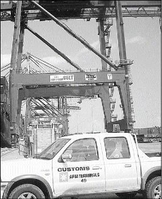
Government's plans to modernise the customs system is on track.