
Robert Buddan POLITICS OF OUR TIME
ONE CAN speak of three 'governments' in one in Jamaica for the last two years, but with each having somewhat different motives, priorities and capacities.
For one, there is the ruling political alliance. It is a coalition of big business that put together the largest campaign war chest ever to win an election in Jamaica. The coalition cemented the old Edward Seaga-led Jamaica Labour Party (JLP), the anti-Seaga JLP, and the remnants of the National Democratic Movement (NDM), joined by some assorted, but influential, civil society and media organisations, buttressed by party activists and the usual, always available, mercenaries.
Karl Samuda , as minister of industry, investments, and commerce and JLP general secretary, sits at the heart of this private-political alliance, dispensing carrots as best he can to keep it together. He is leader of the political machine. Private sector influential persons carry much weight, too much weight for a democracy of the people. They have paid for the party's large capacity. Their motives help to shape priorities.
the official government
The second 'government' is the one we usually think of, the one that runs the Westminster system. It is the official government. It makes up the executive and a bare majority in the legislature. This is where the political wing of the alliance sits. The private wing sits in boardrooms. Both wings plan together to keep executive and parliament as one. They are not strict constitutionalists or moralists. They keep the alliance together by political means. Golding sits at the centre of this 'government' as party leader and prime minister. He campaigned as 'the driver'. He also sits at the heart of the alliance, using the power of the executive to provide official jobs and keep the political wing of the alliance happy. His power at the centre of the Westminster executive is strong, as is usually the case with Westminster prime ministers, but his legislative margin is weak and his government is politically nervous.
The third 'government' is the public sector. This is the Whitehall part of the alliance. It is an arm of government, not a wing of the alliance. But the alliance has tried to convert it into a wing without clear success or failure. The relationship between the Westminster and Whitehall sections is not a happy one. The former has bypassed the Memorandum of Understanding and frozen wages and salaries. This is seen by the latter as a breach of contract and of trust. The business arm of the alliance would actually like to see the public sector chopped. There is no individual who sits at the heart of this 'government'. It is actually a 'government' by default. It operates the bureaucracy. In doing so, it administers the policies of the previous administration because it has been given little that is new to do. But it only represents routine government. That is all it can be in the Whitehall system.
Contradictions
This explains much about party indiscipline, financial mismanagement, and economic immobilism over the last two years. The lack of clear and consistent response to Jamaica's economic crisis results from the contradictions within and between these three 'governments'. Let's take party indiscipline. The large war chest, complemented by the constituency development fund and state resources, allow the more ambitious and aggressive factions and personalities more power and makes it harder to submit them to discipline. Seaga saw this, commented on it and was thrown out. It is a lethal combination of ambition, aggression and long-held jealousies.
Let's also take financial management. Bill Box wrote on August 14 in the Jamaica Observer that Don Wehby was brought into the Ministry of Finance to "compensate for Shaw's inadequacies", "curb his enthusiasms", and "lend an element of technical competence to the Ministry of Finance". Presumably, Shaw could not provide any of these. He was a holdover from the Seaga team, kept in finance, I suppose, to pacify the Seaga backers. It must have been a political decision to have him there. It couldn't have been for competence.
Then there is the matter of national leadership. This Westminster leadership does not represent government that is involved in national mobilisation, major new policy pronunciation, or strategic intervention of the kind you would expect at a time of crisis. The leadership expected to drive transformative government, public sector and private sector is absent.
It is instructive to recall a Gleaner editorial of January 1, 2009. It said, "Unfortunately, in the 15 months he has been in office, Prime Minister Golding has not displayed the transformational leadership which he promised and of which, while in opposition, he had led many Jamaicans to believe he was capable."
The editorial pointed to the political nature of his disinclination: "The PM's apologists, with conventional reasoning, will argue that Mr Golding faces constraints given his party's narrow electoral victory in 2007 and his uncertainty about the loyalties of some on whose support he depends in the legislature." It advised Golding to look beyond the next electoral cycle and provide transformational leadership.
'Narrow electoral victory', 'uncertainty about loyalties', and 'electoral cycle' all point to the political circumstances which, I argue, have been dominant. The political priorities and motives have undermined the governmental capacity, including political will, to drive transformation. This has led to 'buy' elections, expensive executive, parliamentary disorganisation and misbehaviour, and abuse of state resources. Most of all, it has failed to produce better policies than the previous administration had, or improvement in the management of these policies. This has resulted in economic immobilism rather than mobilisation for production.
The fourth 'government'
A fourth 'government' stands in waiting - the International Monetary Fund (IMF). It is about to be called in to stand by. The present 'governments' failed to lead proactively by anticipating the economic crisis and taking measures to mobilise and adjust lifestyles to what the country can and cannot afford.
Within the first period, September 2007 to April 2009, there was a microcosm of a more acceptable alliance with which Golding could have worked. In the Ministry of Finance, there was a tripartite team representing government (Audley Shaw), labour (Dwight Nelson) and the private sector (Don Wehby). But that was not the model of governance as a whole, and besides, it has now fallen apart.
'governments' to change
How will the model of the first period hold? There is a transition between April when Dwight Nelson was sent to National Security, continuing through with Wehby's return to the private sector at the end of July, and the signing of an IMF agreement, probably between September and December. When the fourth 'government' enters the alliance with its terms and conditions, however stated, the game of the three 'governments' will change. A new set of motives and priorities will enter the mix in a dominant way.
We should make sure that the terms and conditions upon which we enter an agreement with the new 'government' will not sacrifice critical social protection, and that burdens are shared equitably. But we will hope that the new 'government' brings discipline to government and realism to financial management. It won't bring a transformative and productive economic model to Jamaica. For that we will need another government.
Robert Buddan lectures in the Department of Government, UWI, Mona. Email: Robert.Buddan@ uwimona.edu.jm
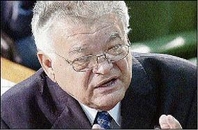
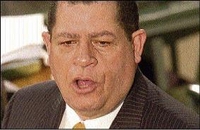
Samuda and Shaw