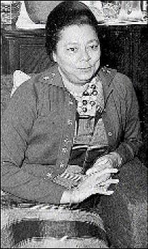
Lady Bustamante in September 1962. - File Photos
Vice-chancellor Emeritus of the University of the West Indies, Professor Rex Nettleford, yesterday paid tribute to Lady Bustamante, who died Saturday at age 97. She was the widow of Jamaica's first prime minister, Sir Alexander Bustamante.
Nettleford described Lady B, as she was best known, as "a tremendous source of energy to the people down below". At the same time, he said not enough was being done to document the impact persons such as she and her contemporaries in the labour movement had on the shaping of modern Jamaica.
"We have to make this information accessible. The unions, in particular, have to get the history of the movement out to their members," said Nettleford, who has written extensively on Jamaica's labour roots.
Outstanding activist
Clive Dobson, president emeritus of the National Workers Union (NWU), said Lady Bustamante was among "our movements most outstanding activists".
He agreed with Nettleford that labour and its stalwarts have never been given their due.
"The labour industry is the real foundation of Jamaica's political system but there has never been any real sense of this," Dobson said. Lady Bustamante, who had been ailing for some time, died at the Tony Thwaites Wing of the University Hospital of the West Indies. Prior to marriage, she was Gladys Longbridge, a clerical worker with the Bustamante Industrial Trade Union (BITU), which Bustamante formed in 1940.
The BITU was the labour organ of the Jamaica Labour Party, founded in 1942 by Bustamante. For many years, it competed with the NWU to represent employees in Jamaica's largest companies.
The NWU was established in 1952 by Norman Manley, first president of the People's National Party. Manley was also Bustamante's cousin and political opponent.
Nettleford said the poised nature of Lady Bustamante and Edna Manley, Manley's wife, reflected the political scene in pre-independent Jamaica.
"They appreciated the non-confrontational aspect of the two-party system at the time. They knew how important it was to agree and disagree," he said.
Lady Bustamante was born in Westmoreland in March 1912. Local historians consistently point to that parish as the birthplace of the modern Jamaican labour movement.
In May 1938, Bustamante and nationalist St William Grant, among others, clashed with management at the Frome sugar factory for improved wages for workers.