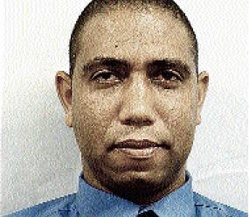
Christopher Gentles, director general, Coffee Industry Board. - File
Coffee dealers who want to sell their products under the Jamaica Blue Mountain or Jamaica High Mountain brands, must under new regulations enter into a trademark agreement with the Coffee Industry Board (CIB) for US$2,500 (J$222,500).
There are also new requirements for record keeping by all coffee producers and dealers, and the filing of audited accounts each year, delivered to the CIB within 90 days of the close of the financial year.
But the much harder part is that each coffee farm must deliver a provable minimum 6,000 boxes of cherry per crop year to qualify for a dealer's licence, which some producers say is too onerous a condition and will squeeze small farmers from the market.
To them, head of the CIB Christopher Gentles has a simple message: toughen up.
"New dealers need to know what they are getting into. Coffee production is a fragile operation," Gentles said.
The board is rolling out a programme of reform that addresses quality, and licensing and registration of producers/ dealers and their products. Gentles and his team have stepped up the policing of coffee imported and distributed, the products sold from grocery shelves, as well as thecoffee exported to world markets - all of which must be licensed to ensure that quality is maintained and the equity in the brands are not diluted.
The dealers with whom the board has had several workshops and site visits, have until July 31, 2011 to restructure operations to satisfy the new requirements for licensing.
Dorienne Rowan-Campbell, a small producer of organically grown Blue Mountain coffee, to get around the volume requirement, says she is negotiating a special licence with CIB for the small quantities of beans she roasts, for export to Europe - similar to a special licence granted to about five 'specialty coffee' dealers.
But Rowan-Campbell sees the new licensing programme as a plus for the industry, as does Gordon Langford of RSW Estates, who said it would help reduce counterfeiting and theft.
Unaware of new fee
Langford, whose current licence expires July 31, said he was unaware of the new US$2,500 fee, but was much more concerned that the 6,000 box requirement would force him to cobble purchase deals and compromise the quality coffee he produces.
The new regime will require production of 60,000 pounds of cherry, with each box holding 10 pounds, but Langford said it far exceeds last year's output of 23,100 pounds of cherry, or 150 barrels each holding 154 pounds.
Gentles says the new guidelines are designed to reduce the "incompetent short-term trader mentality" that has influenced the culture in the purchasing of cherry coffee in the past.
Licensing and branding
According to Gentles, licensing and branding could position Jamaican dealers to sell their coffee in 21 countries, but on a broader scale the new rules are designed as well to ensure financial and technical competence and integrity of the coffee dealer and/or coffee plants in the production of the "world's finest coffee".
The 2009 coffee licensing regime was implemented under the Coffee Industry Regulation Act (CIRA), with the stated aim of ensuring the development of the coffee industry to international standards.
"The idea is that if the coffee dealer understands the dedication and financial requirements of running a coffee farm, he will make financial and policy decisions that benefit excellence in coffee production and will the farmer in the long run," the CIB head said.
Registered trademarks owned by the Coffee Industry Board are for the protection of the brand and improvement of the brand equity for future generations of Jamaicans, he asserts.
"The registration of brands in 21 countries around the world, and the hiring of watch services is an expensive business but very necessary in order to prevent the brand from misrepresentation by unscrupulous individuals, who seek to sell a lesser quality coffee than Jamaica Blue Mountain, in order to enjoy short-term profits."
Jamaica Blue Mountain coffee is grown and pulped only within the legally and geographically prescribed area defined as the Blue Mountains, and has to be certified as such by the CIB.
Other brands, for which the trademark licencing comes at a lower price, include Jamaica High Mountain Supreme, the premium brand for 'lowland' coffee, produced at a lower elevation than the Blue Mountain brand.
High Mountain Supreme is the third most expensive and widely traded coffee in the world and must be produced by licensed dealers certified to operate in high mountain regions at elevations of 1,000 feet above sea level, or higher.
The coffee also has to pass a taste test.
Rohan Marley - chairman of the 52-acre Marley Coffee farm in Chepstowe, Portland, who in June, attracted the ire of the CIB quality control unit for what appeared to be an attempt to leverage the Blue Mountain name to sell his product ahead of his licence application being approved - said the tough stance adopted by the board was making it harder for nascent businesses like his to take off.
Marley also acknowledged that licensing the branded name was "the only way to protect the coffee production coming out of the Blue Mountains of Jamaica", but said the regime should not be so stringent as to create a barrier to market entry.
"Being a Marley, I 'overstand' trademark infringements throughout the world. Unfortunately, the CIB's push to protect the brand has made trading a harder road for the smaller farms," said Marley, son of reggae icon, Bob Marley.
The board should come up with "ways that a smaller farmer like myself can still benefit from our production," he added.
"We have one of the best coffees in the world so we must have strict regulations on how we treat the second most sought after commodity outside of crude oil."
Coffee farming, according to Gentles, is an expensive venture and those without the required resources should consider staying out of the business.
It takes, he said, $3.5 million to grow 1,000 boxes of cherry coffee.
"The costs of mistakes are high and this is no game for weak-kneed amateurs."
Putting three acres of Jamaica Blue Mountain coffee under production requires investment of some $1.5 million, and it will be three years before the first crop.
A coffee dealer would have to have at least 60-80 acres, said Gentles, to meet the required minimum production to qualify for a licence.
But dealers are also allowed to make up volume through cherry purchases from other farmers.
The sector includes 23 licensed dealers, 17 of whom are Blue Mountain certified, while three of them deal high mountain coffee.
Largest purchasers
An estimated 7,000 farmers sell their beans to eight companies. Wallenford Coffee Company and the Mavis Bank Cooperative are said to be two of the largest purchasers.
Well-known coffee producers include Salada Foods, Wallenford, Mavis Bank Central Factory and Coffee Traders Limited, which are industrial sized coffee dealers with large amounts of capital, and boutique operators such as RSW Estates.
Whatever the size of the farm, "only the excellent products will be certified as our premium Jamaican coffee," said the CIB head.
A dealer's licence is restricted to trade in roasted coffee beans and coffee products. The CIB is the only entity allowed to export green beans for reasons of quality control.
A cess, ranging from US$53 to US$91 per box, is paid on cherry coffee and on green and roasted coffee sold both locally and abroad, earning the CIB so far this year US$36 million from 356,000 boxes processed.
Jamaica's coffee industry, measured by exports, was valued in 2008 at US$26.5 million.
avia.collinder@gleanerjm.com