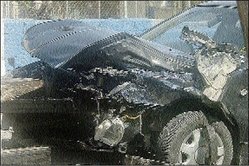
Men suffer inordinately from road-traffic crashes, accounting for 80 per cent of the fatalities. In 2007, there were about 350 deaths and more than 14,000 injuries due to motor-vehicle crashes. Pedestrians are the victims in nearly a third of the deaths, while passengers in motor vehicles comprise almost another third of the deaths. Drivers of motor vehicles account for nearly a quarter of the deaths, while the remaining victims are pedal cyclists and motorcyclists.
Causes of crashes
You don't have to be a scientist to realise that the most common causes of crashes in Jamaica are driving at high speeds, drivers and pedestrians not obeying the road code and poor road conditions. Add to this the high level of indiscipline among our drivers, the low rate of seat-belt compliance (69 per cent drivers and 62 per cent passengers) and the extremely low level of wearing helmets among cyclists (seven per cent and their passengers, six per cent). This explains why the number of deaths each year has remained constant over the last five years (12/100,000 of the population).
Lack of emergencypre-hospital care
Deaths from road-traffic crashes could decrease if a formal, publicly available pre-hospital care system existed. Unfortunately, post-crash support is available only in a few areas. Most crash victims are transported to hospital by untrained personnel.
Safety legislation
There has been some progress with the establishment of a National Road Safety Council and the introduction of several driving legislation. Seat-belt and child-restraint legislation are the most successful, to date. Unfortunately, these laws require greater enforcement. The drink-driving law is a sore point, since it needs to be supported by random breath testing. Police checkpoints are frequently used to enforce speed limits but excessive speed remains a major cause of crashes.
New strategies
Strategies to reduce fatalities on our streets should include formal safety audits for major new road-construction projects and existing road infrastructure. The audits must include the construction of walkways for pedestrians. Other measures should include the promotion of travelling by public transport, walking and cycling. The introduction of road-safety practices in school will hopefully reduce collisions in the next generation.
Dr Pauline Williams-Green is a family physician and president of the Caribbean College of Family Physicians; email yourhealth@ gleanerjm.com.