
I often eat nuts and recommend them as healthy additions to our daily diet. Interestingly, not all nuts are really nuts. Contrary to popular belief, peanuts are not true nuts, but legumes, and soy nuts are not nuts, but beans. Nonetheless, they possess many of the same health benefits as the true tree nuts. Nuts have good nutritional value as the table below demonstrates.
DISEASE PREVENTION
Medical research confirms that eating as little as an ounce of nuts four to five times weekly can reduce the incidence of heart disease and cancer. This is particularly true of soy nuts. In one study, for example, the risk for coronary heart disease was reduced by 35 per cent in those who ate five or more ounces of soy nuts per week.
DIETARY FIBRE
Nuts can be a good source of fibre, ranging from one gram of fibre per ounce of cashew or pine nut to three grams per ounce of hazelnut, almond or pecan. Soy nuts have the highest fibre content. Dietary fibre promotes a healthy digestive system, reduces cholesterol, and decreases your risk of developing heart disease.
HEALTHY FATS
Yes, nuts are high-fat food, but the fats they contain are healthy fats. Nuts contain absolutely no cholesterol and are an excellent source of monounsaturated fats, the desirable fat known to lower total and LDL (bad) cholesterol. Coconuts (and coconut oil) also contain no cholesterol.
MAGNESIUM
Nuts are a good source of the mineral magnesium. Almond and cashew top the list for magnesium content. Everyone talks about calcium but the great importance of magnesium is often overlooked. Magnesium deficiency can contribute to heart disease, high blood pressure, stroke, diabetes, muscle cramp and migraine headache. Research in the United States indicates that more than 60 per cent of the population is not having enough magnesium in their diet.
SELENIUM
This potent mineral antioxidant carries many health benefits, including cancer protection and immunity enhancement. The Brazil nut is exceptionally high in selenium. Just three large Brazil nuts provide approximately 200 micrograms of selenium - the amount recommended for antioxidant protection. One ounce of other tree nuts, e.g. almonds, provides fewer than five micrograms per ounce.
EXTRA CALORIES
Nuts are a concentrated source of calories. Calories are the units we use to measure the energy content of foods. Peanuts have about 140 calories per ounce, pistachios and cashews have 160 calories per ounce and macadamia nuts up to 200 calories per ounce. So if you want to eat more nuts but wish to maintain your current weight, you should either exercise more or eat less in other areas of your diet.
ADDITIVES, CONTAMINANTS
Beware of what you get in commercially packaged nuts. Unfortunately, most of these have large quantities of undesirable and unhealthy additives. This includes salt, sugar, and monosodium glutamate (MSG). Please read the label carefully before eating packaged nuts or, even better, choose natural unprocessed nuts.
Peanuts are particularly prone to contamination with aflatoxin, a natural toxin produced by a fungus that grows on peanuts when stored in warm, moist conditions. Aflatoxin is a potent carcinogen, which causes liver cancer in laboratory animals and may have contributed to human liver cancer in Africa and China where peanuts are a dietary staple. Besides peanuts, traces of aflatoxin have also been found in pecans, pistachios, walnuts, milk, grains and soybeans. As a precaution, avoid eating stale peanuts or nuts that have been stored for a long while.
ALLERGIES
Nuts are one of the most common causes of food allergies. Peanuts are the main source of nut allergies before the Brazil nut, cashew, almond, walnut and pecan. Allergy to nuts may develop at any age but often starts in childhood. Allergy to one type of nut increases your risk of reacting to other nuts.
Peanut allergy produces symptoms such as vomiting, diarrhoea, urticaria, angioedema (swelling of the face, throat or skin), abdominal pain, eczema, asthma and shock. Anaphylactic shock is a severe reaction that can result in death from obstruction of the airway, low blood pressure or heart failure. This can happen immediately or develop hours after eating peanuts.
NUT BUTTERS
Crushed nuts create a spreadable food called nut butter. Apart from the popular peanut butter, other butters are made from almond, cashew, macadamia, soy, walnut and pistachio. These make delicious snacks but are high in calories and may be loaded with added sugar and unhealthy hydrogenated oils.
So enjoy your nuts but let moderation be your guide.
Email Dr Anthony Vendryes at vendryes@mac.com or listen to 'An Ounce of Prevention' on Power 106 FM on Fridays at 8 p.m. The programme streams live at www.go-jamaica.com.

Cashew can be a good source of fibre.
Nuts
| 1oz serving | Protein | Fat | Carbohydrate | Calories |
| Peanut | 9 | 14 | 6 | 140 |
| Almond | 15 | 7 | 12 | 105 |
| Pistachio | 1.6 | 14 | 7 | 160 |
| Brazil nut | 0.1 | 19 | 3.5 | 185 |
| Macadamia | 1 | 21 | 4 | 200 |
| Cashew | 5.4 | 14. | 10 | 160 |
| Pecan | 1.6 | 19 | 5 | 195 |
| Coconut | 0.8 | 15 | 7 | 160 |
| Pine nut | 3.2 | 18.4 | 5 | 176 |
| Water chestnut | 1.2 | 6.7 | 6.4 | 97 |
| Hazelnut | 4.2 | 18 | 4.5 | 180 |
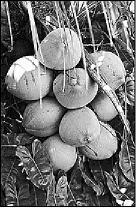
Coconuts