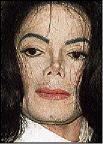
Jackson
Michael Jackson has died but he has left us with a host of songs to remember him by.
But did the world see or feel his pain when he was suffering?
Jackson did several recordings that seem to have some form of message in them. The Gleaner examined some of these songs with the aim of unearthing, through the assistance of psychologists, what Jackson might have been going through or was trying to confer when he sang them.
In his song Childhood, he asked, "Have you seen my childhood?" The song also states that he is searching for the world that he came from.
Dr Asquith Reid is of the view that someone's childhood influences his or her adult life.
"He seems to be searching for his identity. Perhaps he could have been deprived of a childhood and did not have a complete and rounded life. Seeing that he was into singing and performing from an early age, he might have missed out on the social aspects of his life," Reid said.
Reid further stated that Jackson could have undergone this same experience at home, where he should have felt safe and got to know his family.
"Therefore, him being shy and withdrawn could have been born out of his experiences at home," he concluded.
The Rev Dr Aaron Dumas interprets the song as Jackson's expression of what he longed for when he was a child.
"He was just saying what he felt from he was a child but probably could not have said it then out of fear of punishment," Dumas said. "In his song, he is asking persons not to be too critical but to try to love him and understand what he is going through instead."
Expression of pain
Reid deems the song Who Is It an expression of pain that seems to have been caused by someone he loved dearly.
"This could have possibly driven him to substances that would help to alleviate the pain because one's psychological pain can translate itself into physical pain," Reid said.
In one of Jackson's other songs, They Don't Care About Us, he has a number of very strong lines such as "I'm tired of being the victim of hate. You're raping me of my pride".
In the song, Jackson also states: "Don't you black or white me" and goes on to make references to the government. Reid is of the opinion that the singer was dealing with racial issues, as persons have questioned whether he wanted to be black or white.
"He probably felt abandoned by some person or even some of his fans because of the controversy surrounding his complexion change," he said.
Dumas believes Jackson's reference to being raped of his pride is most likely speaking broadly about his struggles in the United States.
"He was responding to criticism. He broke the barriers in his own way. So clearly he was a very complex individual," he said.
Stranger in Moscow is another song that is saturated with expressions from Jackson that seem to be geared towards allowing persons into his deepest inner feelings.
The song states: "Swift and sudden fall from grace, sunny days seem far away." He also goes on to sing, "Here abandoned in my fame."
Reid said Jackson might have been conveying in this song that he was feeling abandoned by society.
"It seems as though he went through abandonment. That theme seems constant in his songs."
Asked if this was typical whether it was an experience that might be shared by some Jamaicans who become celebrities or public figures at a young age, he said it was not "something that is a typical thing that affects all childhood stars".
"Take Beenie Man, for example, he seems quite normal. He does happy songs."
It has been rumoured since Jackson's death that he might have suffered an overdose of Demerol. Demerol is usually used to treat moderate to severe pain. Jackson even penned a song about it, titled Morphine. In that song, the King of Pop sings, "Yesterday you had his trust, today he's taking twice as much. Demerol, Demerol, oh God, he's taking Demerol."
Reid believes that if someone is feeling unbearable pain, it is normal for him to fall in love with anything that relieves it.
"Persons are usually aware they are going down a slippery slope but find it hard to stop," he said. "Persons can either be physically or psychologically addicted to something. Psychological addiction is the more serious of the two and the person who is psychologically addicted is likely to find it hard to stop."
Dumas was surprised to hear Jackson had written a song with such lyrics.
"I wish someone had come to his assistance. Most likely, he was crying out for help," he said.
ryon.jones@gleanerjm.com