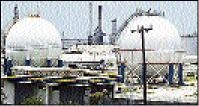
 The Petrojam refinery - File
The Editor, Sir:
I read with great interest the article 'Caricom killing us softly' in The Sunday Gleaner. Much of the data used and statements made by Claude Clarke are true but while he has made a strong case for reciprocity in trade, it certainly does not justify Jamaica's withdrawing from Caricom.
There are certain realities which he seems to ignore. I wish to comment only on the vexing matter of Trinidad - Jamaica and the liquefied natural gas (LNG) arrangements. The most important myth which we must debunk is that it is somehow possible for Jamaica to get LNG at prices at which gas is sold in Trinidad. While it is true that Trinidad manufacturers benefit from cheap electricity and natural gas, three important features of the Trinidad gas market should be noted:
LNG is not used as fuel in Trinidad and Tobago and
there is no single price of natural gas in Trinidad.
a significant portion of the gas sold to Trinidad and Tobago Electricity Commission (T&TEC) comes from dedicated sources not available to the general market. More important, the transition from natural gas to LNG involves the processes of liquefaction, shipping and regasification.
Processes involve
These processes involve plant and equipment which, on a simple cost recovery basis, would increase the delivered price by between 40 per cent and 60 per cent of the natural gas price, depending on economies of scale. Jamaica, being a small market would be on the higher end. This would still be cheaper than oil prices at US$40/bbl and over and, therefore, it was and still is in Jamaica's interest to look at what it would gain rather than what it thought it was giving up.
The second myth is that Trinidad meaning the Government of Trinidad and Tobago could somehow supply LNG to Jamaica. The LNG plants are owned by the operating multinational companies. While the state-owned National Gas Company has equity ownership in Train 4 along with some processing rights, the facts are the NGC does not have any gas resources of its own.
It must therefore buy natural gas from the producers, which gas the producers will sell on an LNG equivalent basis. To that acquisition costs it must then add the cost of liquefaction, shipping and regasification. Given the relatively small size of the Jamaican market, the projected economics on Jamaica as a single destination trade are likely to be very marginal.
The Jamaican government may have also simply lost the opportunity by protracting the negotiations by referring the matter to CARICOM. By the time CARICOM responded with a very non-committal opinion, it was far too late for Jamaica to be included in the NGC's plans for marketing its share of LNG capacity.
Viable market
But all is not lost. There may still be hope if Trinidad finds investors and reserves to build another LNG train. No LNG investor will refuse a viable market. I would like to make three additional suggestions to the Jamaican government, Clarke and the Jamaican private sector.
1. It may be much easier and cheaper for Jamaica to seek to reduce its energy cost using advanced coal technology - clean burning, than expensive LNG .
2. If it wishes to pursue the natural gas option, natural gas via pipeline from Colombia may be a more feasible and practical option.
3. Jamaican firms in which energy accounts for a significant per cent of total costs may consider establishing in Trinidad to take advantage of the lower energy costs. They would then have the opportunity to repatriate surpluses to Jamaica, thereby boosting other non-energy intensive investments in Jamaica.
I am, etc.,
Gregory McGuire
mcguire.gregory@gmail.com