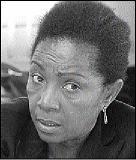
Samuels-Brown
The Editor, Sir:
I refer to your editorial of Sunday, May 10, and write to clarify a few misunderstandings which it appears fuelled your no doubt well-intentioned piece.
At the heart of your concerns are delays in the justice system and, in particular, bringing cases to trial and completion. This was indeed a major concern expressed by members of the public and stakeholders in the justice system to the Justice Reform Task Force which over a period of seven months comprehensively examined the justice system and made recommendations for improvement, including matters to do with delays both in relation to civil and criminal cases.
I am shocked that with this report which was made public, and which is certainly available to the media, that misconceptions still exist relative to the cause of the delays in the justice system. Certainly, there are errant individuals, be they lawyers for the defence, the prosecution, or even members of the judiciary, but this has not been found to be the root of the problem.
Main causes for backlog
The report is available at www.cba.org/jamaicajustice/research. However, since your editorial was directed at criminal trials in particular, you may wish to note that among the main causes for the backlog identified were insufficiency of and the need to mobilise additional judicial and prosecutorial resources, our use of the criminal justice system for minor matters, the laborious and slow method of recording court proceedings.
I understand from the attorney general that steps have been taken to implement the recommendations on a phased basis.
It seems that in the meantime we are determined to continue the blame game. I beg you, editor, to reconsider the views expressed in your editorial in light of the following facts:
1. While Harry Daley's case continued in the Half-Way Tree Court, several lawyers and their clients turned up for trials in court that could not proceed as Daley's trial was in progress.
2. Many of the accused persons so affected are persons who are in custody, unlike Daley who, I understand, is on bail.
3. Daley's trial was not fixed to continue beyond the week of May 8, 2009. The lawyers involved, and indeed the resident magistrate, had already committed to trials and hearings elsewhere, and had they given Daley's case unscheduled priority as you suggest they would have, these same lawyers, been accused of irresponsibility in 'double booking'.
4. The exact duration of a trial cannot always be predicted. This has to do with the very nature of examination and cross-examination and exigencies which often develop in the course of a trial, which the judge and lawyers must take account of if justice is to be done.
5. With our overburdened system an unfortunate history or culture of adjournments which lawyers are almost 90 per cent of the time not notified of before the date and time of court, it is so that some do set two cases for the same date, the likelihood being that one will not proceed and, in the meantime, justice can proceed relative to the other client.
Join reform process
You will see that the recommendations of the task force are geared towards minimising these problems. I hope you will join with the Bar and other stakeholders in assisting and insisting on the reform process being vigorously pursued.
In the meantime, studies are now being conducted by the court administration and the private Bar to gather data as to the contributors to adjournments. I assure you that preliminary data do not point in the direction of your article. Your own very professional journalists may wish to carry out their own investigations utilising, for example, the Access to Information Act. At the end of the day, you may well be surprised to discover the overwhelming cause of delays in the system.
In the meantime, let us not, as the plotters in Shakespeare's Henry VI, embark on a course to kill all the lawyers, thereby leaving the way open for mayhem.
I am, etc.,
JACQUELINE SAMUELS-BROWN
Kingston