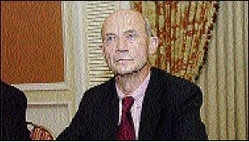
Director general of the World Trade Organisation Pascal Lamy.
WESTERN BUREAU:
Director general of the World Trade Organisation (WTO), Pascal Lamy, has urged Jamaica and other Caribbean countries not to establish protectionist barriers to cushion their economies from further fallout related to the global financial meltdown.
"The WTO has started monitoring trade-related measures taken by our members during this crisis, as a device to provide transparency and, through peer pressure, pre-empt the threat by a shift towards protectionism," Lamy said during the Second Regional Aid-for-Trade Review for Latin America and the Caribbean at the Ritz-Carlton hotel in Montego Bay last Wednesday.
The WTO director general further noted that the imposition of unfair trade barriers could spur retaliation and further choke trade as an engine of growth. Free-flowing international trade has been tapped by financial pundits as an essential stimulus to get the wheels of global industry moving again.
Since 2008, world economies have either been rattled or shaken to their core - even to the brink of collapse - as credit markets dried up and major industries foundered as global consumer demand shrunk.
Some local sector stakeholders such as Senator Norman Grant, president of the Jamaica Agricultural Society, have called for the Government to undercut the competitive advantage of foreign imports, particularly with regard to farm produce, by slapping heavy tariffs on trade rivals.
Protectionism refers to the policy of safeguarding domestic sectors against foreign competition by means of either tariffs, subsidies or other hindrances.
Prime Minister Bruce Golding shared similar sentiments, adding that trade among the stakeholders within the region fosters healthy economic partnerships.
Meanwhile, Golding argued that Jamaica will need to expand its export trade capabilities and enter into new viable markets that generate revenue and boost economic activity in the country.
"We have to do more and a lot of that which needs to be done will require a more assertive private-sector response.
"There are opportunities out there that can be capitalised and while we can open the door, reduce bureaucracy and remove the obstacles, it will have to be the 'hard-nosed' businesspersons who will have to take the investment decisions," the prime minister said.
The Second Regional Aid-for-Trade Review for Latin America and the Caribbean seeks to help developing countries, particularly least developed and low-income countries to build the supply-side capacity and trade-related infrastructure needed to implement and benefit from the WTO agreement and, more broadly, to expand trade.
sheena.gayle@gleanerjm.com