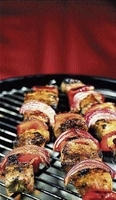
An adobo sauce rich with smoky chipotle chilies gives zest to pork tenderloin grilled wiht bell peppers and red onions. Puerto Rican influence can put extra spice into backyard barbecues. - MCT
Puerto Rican cuisine reflects the rich heritage and cultural potpourri of the northern Caribbean island. Before Columbus landed, Puerto Rico served as a bridge between the Caribbean and the north coast of South America.
The racial mix includes Tainos and later Spaniards, Africans, Chinese, Italians, French, German and Lebanese.
Americans also visited the island, later followed by Cubans fleeing the Communist state of Cuba. The latest arrivals were from the Dominican Republic to add to the racial variety in the country.
Barbecue
Though Puerto Rican cooking styles are in some ways similar to Spanish, Cuban and Mexican cuisine, they are unique, giving a tasty blend of Spanish, Taino, African and American influences. The cuisine, cocina criolla, started with the first inhabitants, the Tainos, the natives Christopher Columbus found, who used foods which are still part of the cuisine today. Examples are yucca (cassava), peppers, seafood and corn. Barbecue, invented by the Tainos, is still influencing grill/jerk cuisine in the region.
The Spanish brought beef, pork, rice, wheat and olive oil and the Africans brought with them okra and taro. The mingling of flavours and ingredients has been passed down through generations to different ethnic groups have settled on the island, creating the exotic blend of today's cooking styles in Puerto Rico.
Adobo
There are two magical words essential to Puerto Rican cookery as it relates to spice. The first is adobo, a blend of ingredients crushed and mixed in a mortar and pestle and rubbed into poultry and meats to impart a unique seasoning.
The other is sofrito, a combination of ingredients used as a flavouring to give a distinctive taste to native dishes.
Puerto Rican food is cooked in a cauldron or caldero, which is a cast-iron pan with round bottom and straight sides. The caldero bring flavours together in dishes such as stews, which are popular in that island's diet.
Puerto Rican Beef Stew includes chunks of beef, green peppers, onions, garlic, cilantro, potatoes and whatever else the cook likes. Seeded raisins are added on special occasions. Dishes like Breaded Calf's Brains (sesos empañados) and calf's kidneys (rinones guisados) are popular among Puerto Ricans.
Plantains
Starches include breadfruit prepared in a number of ways to serve as an accompaniment to entrees. Plantains are very important to the island's agriculture. Plantains are even imported from Costa Rica and Dominican Republic to meet the high demand for plantains in Puerto Rico.
When green, they are called platanos verde; in a ripened state, they are termed amarillos. Plantains are fried, boiled, roasted or baked in interesting dishes. Plantain leaves are used to wrap up certain foods which are baked or boiled. Puerto Rican ancestors would have placed their plantains with the ambers under the roasting pig. Today, plantains are roasted by placing them on the grill over high heat until the skin is black. Then lower to medium heat, cooking until plantain is soft. Ripe plantains can be roasted in the same way, but for half the time.
Tostones
Plantains can also be used to make pastels, made in the same fashion as Jamaican dukunnu, but with savoury fillings of pork and garbanzo beans. Mfongo is made by mashing twice fried plantains and combining with garlic, olive oil and bacon. Candied plantains are used for dessert.
Chicken dishes
Like Jamaicans, chicken is popular among Puerto Ricans and is flavoured with different spices and seasonings. The most popular dish is Chicken with Rice (arroz con pollo). Other favourites are Chicken in Sherry (pollo al jerez) and Sweet and Sour Chicken (pollo agridulce).
Fish and shellfish are favourites for tourists and natives alike. Fish is fried and served with a Puerto Rican sauce (mojo isleno) similar to Jamaica's escoveitched fish. Fresh fish is often grilled and shrimp is often cooked in beer and crab is boiled (jueyes hervidos). Eggs are used regularly to make Spanish Omelette (tortilla Espanola), cooked with onions, cubed potatoes and olive oil.
Coconut desserts
Desserts are made from produce, for example Sweet Potato Balls with Coconut and Cinnamon and Sweet Potato Cake. Guava cakes, guava jelly, guava pudding and guava paste are popular, as is the Puerto Rican pumpkin cake. Coconut is the most common ingredient in desserts. There is coconut flan, coconut cream desserts, coconut squares, coconut meringue and candied coconut rice and coconut bread pudding.
The Puerto Rican kitchen is influenced by several cultures and, despite the influence of American fast foods, that island's cuisine is still an exciting tradition.
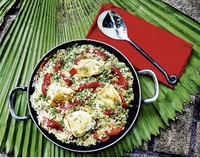
Puerto Rican chicken and rice is a great dinner-time meal than can be made in a jiffy.
Plantain Tostones (Pressed Plantains)
(Tostones de Platano)
3 green plantains
4 cups water
2 cloves garlic, peeled and crushed (optional)
2 tbsps salt
Vegetable oil for deep frying
Method:
Peel plantains and cut into diagonal slices, 1 inch thick. Add garlic and salt to water. Soak plantain for 15 minutes. Drain well and deep-fry in oil heated to 350F for about 7 minutes. Remove from pan and place on absorbent paper. Fold the paper over and pound flat with hand or suitable instrument. Dip in salted water again and remove immediately. Drain thoroughly on absorbent paper. Deep-fry in heated oil, 375F until crisp and golden. Remove and drain on absorbent paper. Sprinkle lightly with salt.
Makes 12 to 18.
Heather Little-White, PhD, is a nutrition and lifestyle consultant in the Corporate Area. Send comments to editor@gleanerjm.com or fax 922-6223.