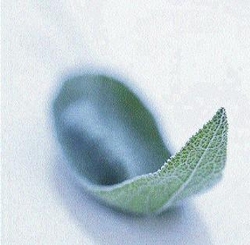
Sage is a herb with remarkable healing powers. A relative of the mint family, its warm, rich aroma has become synonymous with turkey stuffing at Thanksgiving. Sage gives pork or turkey the woodsy fragrance when roasted. The practice of stuffing turkey at Thanksgiving with silver-green sage started with the early Pilgrims.
The name is derived from the Latin word meaning health or healing powers. Sage has been used as a medicinal herb for longer than it has been a culinary herb. It was indispensable in the Dark Ages. The ancient Greeks and Romans administered sage for everything from snake bite to promoting longevity.
Sage was steeped in hot water as a tea. Introduced to American palates in the 1800s, medicinal usage of sage declined as the culinary use increased.
Aromatic oil
What is the therapeutic value of sage? It contains an aromatic oil which gained the reputation of treating a number of illnesses, setting it apart from all other healing herbs.
Herb expert, Dr Varro Tyler, in speaking to the versatility of sage, wrote, "If one consults enough herbalists ... every sickness known to humanity will be listed as being cured by sage." While sage is no cure-all, its exceptional healing properties are shown when sage leaves are used as a bandage to a wound and to counteract snake bites.
As a digestive aid, sage helps to relax the muscles of the digestive tract, making it an antispasmodic used for gastrointestinal complaints.
Preservative
Sage is known for its ability to preserve meats preventing them from spoiling quickly when the fats oxidise (turn rancid). The antioxidants in sage slow spoilage compared to commercially prepared substances, BHA and BHT. It was the ancient Greeks and Romans who first used sage as a meat preservative.
It was also believed that sage could enhance memory following the practice of the Arabs who in the 10th century believed that the herb could extend life to the point of immortality. This belief rapidly spread to Europe, where students at the world's most prestigious school in Salerno, Italy, questioned why should a man die if he has sage growing in his garden.
Bladder infections
By year 1000, an Icelandic herbalist recommended sage for the treatment of the bladder infections and kidney stones. In the 16th century, Dutch explorers introduced sage to Chinese physicians who later used sage to treat insomnia, depression, gastro-intestinal problems and mastitis (nipple inflammation) in nursing mothers.
The United States was introduced to sage by the colonists. This led 19th-century healers to use sage primarily to treat fever. The tea was promoted as a valuable sexual depressant (anaphrodisiac) to check excessive venereal diseases. Claims have been made that it is good for stopping the flow of urine, milk, saliva and perspiration.
Culinary herb
The US Food and Drug Administration lists sage as safe. As a culinary herb, it has a valuable place in the garden and the home. Sage is lemony, camphor-like and pleasantly bitter. It's too intense to eat in its raw state so is best when cooked. Sage is a strongly flavoured herb that benefits from slow cooking in dishes such as casseroles, soups and stews.
It is commonly used as an ingredient in stuffing mixtures but may also be used with other herbs such as basil and thyme, or used to accompany a wide rage of meats, including pork and game. Young, fresh leaves are great for fresh salads and it is often cooked in omelettes, fritters and meat pies and is used to make marinades and poultry stuffing. Sage can also be cooked with liver, fish, lamb, pork, tomatoes, carrots, eggplants, cabbage, onions, lentils and cheese.
Fresh is best
Most culinary sage is Salvia officinalis, known as common sage or garden sage. To recognise sage, it is presented for sale as dried whole or dried crumbled leaves. The taste of dried sage is less lemony and sometimes musty compared to fresh varieties. Sage has a pungent flavour and should be used sparingly; it may be used fresh or dried, but adding too much sage can make your dish taste bitter. Fresh sage will keep for two weeks in the refrigerator when dry leaves are loosely packed in plastic. Sage can be frozen to extend shelf life.
Heather Little-White, PhD, is a nutrition and lifestyle consultant in the Corporate Area. Send comments to editor@gleanerjm.com or fax 922-6223.
Chef's tips for cooking with sage
Wrap small birds like Cornish hens and quails with large sage leaves before roasting or grilling. When the leaves go crisp during cooking, they add a savoury crunch to the meat.
Deep-fry sprigs of sage in olive oil and use as a garnish for roasted meats. No other herb is as delectable as sage when fried in olive oil or brown butter.
Lay sage leaves on pork before roasting. Make slits in the pork or beef and stuff with sage before roasting.
Fresh leaves can be minced and used in breading chicken for frying.
Complementary flavourings include onion, garlic, thyme, oregano, parsley, bay leaf, and rosemary.
Cooking mellows sage, so for fullest flavour, add it at the end of the cooking process.
Sage Brown Butter
Excellent for spooning over fish or pasta
8 tbsps butter
20 sage leaves
Melt butter in a small pan over medium heat. Add fresh sage leaves and cook until leaves are crispy and butter browns, about 5 minutes. Makes 1/3 cup.
Liver and Onions Venetian Style
4 tbsps olive oil
2 tbsps butter
4 onions, thinly sliced
3/4 tsp salt
1 1/2 lb beef liver, cut into 1 1/2-inch squares
1/4 tsp fresh ground black pepper
6 fresh sage leaves, or 1/2 tsp dried sage
Method:
1. In a large non-stick frying pan, heat 3 tablespoons of the oil with 1 1/2 tablespoons of the butter over moderately high heat. Add the onions and cook, stirring occasionally, for 10 minutes.
2. Stir in 1/4 teaspoon of the salt. Reduce the heat to moderate and cook, stirring frequently, until the onions are well browned, about 5 minutes longer. Remove.
3. Sprinkle the liver with the remaining 1/2 teaspoon salt and the pepper.
4. In the same pan, heat the remaining tablespoon oil and 1/2 tablespoon butter over high heat. When the pan is very hot, add the liver and sage. Cook, stirring, until just done, 1 to 2 minutes.
5. Remove from the heat, return the onions to the pan and toss. Serves 4.
Source: Quick From Scratch - Italian