
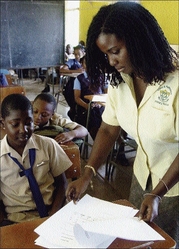
Debbie Davis, a teacher at Time and Patience Primary School in St Catherine, goes through classroom material with a student. - File
The following are excerpts of a Gleaner Editors' Forum which discussed accountability in education, among other issues. It took place last Wednesday at the newspaper's office.
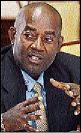
Doran Dixon, President, Jamaica Teachers' Association
"We at the Jamaica Teachers' Association (JTA) have not spent a whole lot of time focusing on the issue of performance-based pay, because as we have indicated before, there is too much inequity in the system in order for us to, at this time, consider performance-based pay.
"We feel that it would be an almost impossible exercise. Our position is that we are not averse to performance-based pay, but we feel that before we can engage in that discussion at a serious level with the Ministry of Education, we first have to get them to do some things to the system that will make the issue of performance-based pay not just a form of window dressing.
Part of the serious approach to eventually looking at performance-based pay is the matter of fixing some very basic but fundamental things in the system.
Minimum standards
One of those is the business of establishing, truthfully, what is termed minimum standards in schools. The disparity between what is considered a 'good school' and what is a school in need of serious intervention at almost every single level is very, very wide. We feel that if you put a teacher at the two ends of the spectrum, regardless of the formula you're going to use to assess performance-based pay, it is going to be an impossible task.
We hope that at some point we can see those changes take place and then we would proceed to have a discussion with the Government in terms of putting a mechanism in place to treat the issue of performance-based pay, but we're not going to be driven by the popular sentiments.
We are also a little dismayed that the 80 per cent of market is being characterised as the catalyst that is going to drive teachers to becoming more accountable and hard-working. We seriously beg to differ. We don't see this 80 per cent of market as really any watershed in the profession. The fact is if you look at the 80 per cent in a realistic way, you would realise how severely undercompensated teachers have been for a long time."
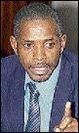
Basil Tabbanor, President, Independent Schools Association
"I have always supported the notion of performance-based pay, having been in the public-school system for five years and having seen the casual way some of my colleagues treat the system and their commitment to education.
Also, having now worked in the private system and realising that you can only exist and remain in
he business if you are performing. We in the (independent-school system) have to give an account to the parents on their investment in education because they have an option as they could have gone to the public system.
Performance-based pay is something the Government needs not only to talk about, but to do serious work in terms of getting it implemented in our schools.
If you are investing capital into something, you are going to want to look seriously at your outcome.
I am not in any way saying that as a result of the 80 per cent alignment to private-sector rates, that should be the motivation for the implementation of performance-based pay, but long before this sort of a move, I supported it."
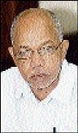
Robert Wynter, Management consultant
"The attempt to develop a pay-for-performance system is a necessary but insufficient condition to ensure accountability which will drive performance at all levels of the system. What is really needed is that each and everyone must first infuse a culture of accountability in all they do. This can only be done by renewing of minds and must be initia-ted by leadership.
The main synonym for accountability is answerabilty. What I interpret from this is answerability, first of all for the authority provided and answerabilty to those who provide the authority.
At the level of the student, parents invest in children and give them authority to learn, use school facilities, etc and, therefore, students are answerable to the investment made in them.
At the national level, citizens invest authority through the elected representatives, to the minister of education, permanent secretary, chief education officer and other managers for the performance of the overall education system in Jamaica and, therefore, these elected and appointed officials need to be held accountable.
Miranda Sutherland, President, National Parent-Teacher Association of Jamaica
Accountability will definitely address the issue of waste - waste of time and other resources. It will address the issue of mediocre and 'slap-dash' work. It will address the issue of corruption, which is rampant in all walks of life. It will address the issue of dishonesty, from telling white lies to being absent from duty.
And in the case of the school system, it will begin again, in a more forthright way, to help the students return to a sense of their own accountability, responsibility, honesty and productive work.
It is a good thing that the Government has responded favourably to the need of financial adjustment (for teachers), but the money received should not be seen as a Band-Aid. If there is problem in the system of delivery, no money in the pocket can correct this.
Nor should it be taken for granted that to earn a Bachelor of Science degree or above is going to automatically correct the problem.
In the process of improving the system, the quality of the teachers in the system must be examined. Many persons came to the profession because it was an easy way out to secure a job. They did not enter it from the heart.
Nadine Molloy, Principal, Buff Bay High School, and President, Jamaica Association of Principals and Vice-principals of Secondary Schools
"It has been terribly interesting following in the media, especially The Gleaner, what people have to say about the fact that we got that $15 billion shared up among 20,000 teachers, discounted by a certain amount, and what is expected of us.
But what do we as teachers think when we think of what we face in the classroom and the output that we really are giving at this time?
We look at things like minimum standards. For us to begin to talk about performance pay or merit pay, we need to talk about minimum standards, (and) what are the parameters that we are working within; do we have a homogenous group or the diversity? What does it say to the whole matter of minimum standards? And if there are no minimum standards in the school, how do they expect us to perform at a standard which we are not aware of?
Then we talk about the other factors, the external factors that will impact on the school and, of course, we talk about what has happened in the society generally and the socio-economic conditions.
We talk about the parental input or the lack thereof; we talk about qualifications and what kind of qualifications we have in the system: Is it relevant? Why is it that we are allowed to use certain kinds of qualifications that do not speak to relevance in terms of the particular area that teachers work in? And then we talk, too, about the matter of training for teachers.
Do we have teachers really properly trained? The persons who are responsible for the curriculum at the training level, are they looking closely at meeting the needs of the children who come to our school? So we talk about things like adolescent literacy (because) we have a lot of children who complete early childhood and the final system and come to the secondary system and they are not at that level of literacy. Are we going to be able to teach them properly, are we trained to do that? Do we have the resources to do that? The material that we use with these students, are they what we need to be using?
For example, older children will tell you that it is primary-school work (they are doing) despite the fact that they cannot do it.
How are we going to approach performance-based pay? Is it going to be on an individual basis? Is it going to be on a group basis?
Dr Trevor Hamilton, International management consultant
"You want to assess to see the transformation of students. Any product you look at is the transformation. I don't believe in a product about exam or anything like that. How you transform one raw material to another is productivity and production. Simple.
It tells you where to put your money and what you get in return for your money - those are the three objectives for any assessment.
Performance assessment
Second, I believe that if you do a performance assessment right now and also an assessment of the environment, you would fail 70 per cent of the teachers. Reason being, we don't know what is the value of the outcome? What is the value of the outcome?
I think parents are the customers. Parents are only active 20 per cent or less of the time and at parent-teacher meetings, you will know if you get 20 per cent that would be an overwhelming thing. So when parental engagement, which is a major driver of accountability, is not there (what you are going to have is a situation where), customers don't want it, so who drives it?
Certainly, I think CXC and other terminal tests which give a 30 per cent pass can't be the only way to measure performance.
I believe the six indicators that we should use for assessing performance in education are:
1. The stakeholders' reaction, that is, the parents, the communities, the succeeding class teachers, the succeeding external engagers of the students.
2. The behavioural outcome, which is the most critical success factor in life and which accounts for more than 60 per cent of employability and job retention.
3. The level of incremental knowledge acquired from one grade to the other.
4. The application outcome which is demonstrated evidence of what the student can do (class assignments for independent work in the school environment).
5. Worth outcome, that is, what the Government, community and parents put in against the results achieved.
6. The level of the investment in the individual teacher in-service development in order to achieve and sustain high performance.