
There are many among us who are born with a disability or afflicted with one later in life. Many able-bodied persons give little thought to the reality that the disabled have sexual desires.
Some persons with disabilities feel unattractive and isolated and often find it difficult to be sexually expressive. They assume that sexual intimacy is no longer possible because of sensation loss in genitals, altered physical appearance or impaired mobility. This week, we will debunk these myths.
What is a disability?
The term 'disabled' defines any person unable to ensure by himself or herself, wholly or partly, the necessities of a normal individual and/or social life as a result of deficiency, either congenital or not, in his or her physical or mental capabilities.
Rights of the disabled
The United Nations General Assembly Resolution 3447 of December 9, 1975, of the Declaration on the Rights of Disabled Persons stipulated that that community has the inherent right to respect for their human dignity. Disabled persons, whatever the origin, nature and seriousness of their handicaps and disabilities, have the same fundamental rights as their fellow citizens of the same age, which implies first and foremost the right to enjoy a decent life, as normal and full as possible.
The nature of the disability refers to the type of disability a person has, which includes mobility, visual and hearing impairment.
Visually impaired
The visually impaired obviously will have difficulty dating and initiating new relationships. They will, therefore, have to use other means of communication, such as verbal gesturing, speech, and touching of the hands and arms of the other person. It is obvious that initiation of sexual activity may be challenging unless proper verbal communication has been established.
Hearing impaired
The hearing impaired will have difficulty communicating with a potential partner who does not understand sign language and many individuals are unwilling to learn it.
Mobility difficulties
Persons with mobility impairments comprise a varied group of individuals. Some use crutches or walkers to move about because of muscular, bone, or joint disorders. Others use prosthetics because of limb amputations or congenital absence of an arm or leg. Persons who use wheelchairs do so due to paralysis caused by a stroke or spinal-cord injury, muscular or bony disorders, limb amputations, multiple sclerosis, cerebral palsy, spina bifida, etc.
Paralysis
This condition usually arises after a stroke or spinal-cord injury and persons' ability to communicate or move is often severely compromised.
Sexual challenges
Touch sensation may be impaired in spina bifida, stroke, multiple sclerosis and spinal-cord injuries, even though they may still feel the desire to have sex and can be sexually aroused.
Impairment of genital engorgement on physical stimulation (ED) is seen in cases of multiple sclerosis, spina bifida, stroke, spinal-chord injuries (amputees are vulnerable) if the sexual organs are removed.
The inability to ejaculate is seen in spina bifida and spinal-chord injuries but some persons may benefit from electrical or mechanical stimulation to facilitate ejaculation. Amputees only have this problem if the sexual organs are removed and it occasionally occurs in multiple sclerosis.
Some difficulty in assuming desired positions is seen in all the above conditions.
Dependence on others for physical help with sexual preparation is also seen in all the above when the use of the limb or trunk muscles are impaired.
In some individuals with spinal-cord injuries, depending on the level of injury, the ability to experience a physiological orgasm is no longer possible. Some persons say that as they become more familiar with their bodies, they begin to notice an increase in the level of arousal when different areas of their bodies are stimulated such as the neck, ears, arms, or any area responsive to tactile stimulation; in other words, they have a mental orgasm.
Loss of reproductive capacity is often seen in patients with spinal-chord injuries because of ejaculatory dysfunction and poor semen quality, particularly sperm motility.
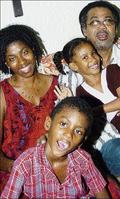
Broadcast personality Patrick Lafayette, who is blind, is a fine example of how persons with disabilities can lead a successful family life. With him in this September 2007 photo are wife Indi, daughter Leila and son Djvan.- Winston Sill/Freelance Photographer
Communication
Disabled persons must master the art of effective communication to ensure that their needs are met. Try to find out what both you and your partner desire and feel comfortable doing. Be imaginative and feel free to experiment with different types of touch, sensual massage and aromatherapy. Learn the art of tantric sex and read the Kama Sutra.
Remember: Disability doesn't automatically translate to a disabled sex drive. Regardless of the person's disability - visual, auditory, paralytic or others - he or she has the emotional need for closeness, affection and sexual stimulation.
Source:
How to Meet, Date and 'Do It' When You're Disabled by Tamar Love.
Dr Alverston Bailey is a medical doctor and immediate past president of the Medical Association of Jamaica. Send comments and questions to saturdaylife@gleanerjm.com or fax 922-6223.