
The Pill is considered today one of the most effective forms of oral contraception. It prevents unwanted pregnancy by 95 to 98 per cent, and many women in Jamaica and across the world use it.
Probably not
Since oral contraceptive was first introduced as a general prescription in 1961 as a form of contraception to prevent pregnancies, tens of millions of women worldwide have joined the throng.
There are several forms of the Pill on the market, but they basically break down into two groups: the combination Pill and the progestin-only mini-Pill.
The combination type contains two artificial steroids that mimic the effects of naturally occurring hormones, oestrogen and progesterone.
Some Pills are monophasic, keeping the dosage of hormones consistent throughout the Pill cycle. Others work in a biphasic or triphasic manner, alters the dosage of artificial hormones two or three times, respectively, through the cycle of Pills, while attempting to produce fluctuations similar to what a fertile woman would undergo naturally.
How does the Pill work?
The Pill is designed to interfere with several normal functions of fertility in order to make a woman unable to conceive due to temporary sterility and/or unable to carry a pregnancy to term (an early abortion).
This process can be accomplished in various ways.
Suppressing ovulation: When a woman ovulates, hormones released from the pituitary, a gland located at the base of the brain, stimulate her ovaries to ripen and release an egg.
The combination Pill usually interrupts the release of these pituitary hormones, resulting in no egg being released from the ovary, thus preventing pregnancy from occurring. With no egg available for fertilisation, the woman is chemically sterile.
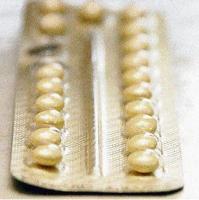
The progestin-only Pill, however, has a weaker effect. It generally does not suppress ovulation.
Inhibiting implantation: Another important aspect of fertility is the process by which the lining of the uterus is replenished and maintained. After an egg is fertilised, it normally implants in this lining (endometrium), drawing nourishment and sustenance. The progestin component of the combination Pill and the progestin-only mini-Pill cause the inner lining of the uterus to become thin and shrivelled, unable to support implantation of the embryo (newly fertilised egg).
Impeding sperm migration: Preceding ovulation, a woman's cervix produces watery mucus through which sperm swim to meet the egg. The mucus also provides nourishment to sustain the life of the sperm cells. This mucus thickens under the influence of progestin and so impedes sperm migration.
Dosage of the Pill
One tablet is taken daily for 21 days with seven days off, or daily for 28 days with days of placebo pills in the last week. The Pill should be started within the first seven days of the menstruation cycle.
Alternatively, to avoid monthly menstruation, the Pill may be taken continuously for more than three weeks, eliminating the placebo week and/or week off. This is a safe option and is usually recommended for three months at a time.
There are two other factors related to a woman's fertility that may be affected by the Pill.
Making changes in the fallopian tubes
Progestins lower the efficiency with which the fallopian tubes propel eggs from the ovaries towards the uterus. This can cause the embryo not to reach the uterus in time to implant successfully.
Stopping a pregnancy
After an ovary releases an egg, the woman's cycle is controlled by a gland that is formed from the now-empty egg sack, the corpus luteum; this normally functions long enough to give an embryo time to implant in the uterus and for the placenta to begin to support the pregnancy.
How effective is the Pill?
In theory, the Pill reaches an effectiveness of over 99 per cent, but in practice, the rate is much lower. Many women will experience an unplanned pregnancy in the first year of using the Pill. Surprise pregnancies with the Pill are due to a number of factors, and interactions between the Pill and some other medications interfere with the proper blood levels of hormones necessary for their birth-control effect.
PROS of the Pill
Highly effective and reversible.
Improved menstrual cycle control.
Improvements in acne.
May lower the risk of pelvic infection and tubal infertility.
Decreased menorrhagia, improved sleep and overall quality of life in pre-menopausal women.
Lower risk of ovarian cancer and endometrial cancer.
Fewer benign ovarian cysts occur.
Lessen benign breast disease.
To protect yourself while taking the Pill ...
Eat a well-balanced diet.
Avoid processed foods and desserts, fried foods, dairy products, meats, poultry, sugar and sugary foods.
Avoid smoking and smoky places.
Aerobically exercise (kick-boxing, walking, jogging, running, swimming) at least three times a week to protect your heart and blood vessels.
Take a daily nutritional supplement that contains vitamins B, C, E and zinc.
The Pill is the most effective contraceptive devised and, like any other potent drug, it sometimes produces unsavoury side effects. There are ranges of risk - from serious or fatal to minor and trivial. The following is a list of the most common side effects experienced by women taking the Pill.
Doesn't protect against sexually transmitted infections.
Need to remember to take every day at the same time.
Can't be used by women with particular medical problems or by women taking some forms of medication.
Can cause side effects such as nausea, increased appetite, headache and, very rarely, blood clots.
Need to use a barrier method if a Pill is missed or using certain medication.
Heart failure, stroke and blood clots. The risk increases exponentially if you're overweight, smoke and are over 35.
Even if you're not overweight and don't smoke, heart and other circulatory disorders risk escalates between the ages of 34 and 44 when you're more than four times more likely to die from circulatory disorders than women who don't take the Pill.
Other side effects of the Pill
Decrease in sex drive, weight gain, breast tenderness, increased vaginal discharge, fluid retention, headaches, nausea, vomiting, urinary tract infections and bronchitis.
Chickenpox, cold, gall bladder and liver disease, benign cancers of the liver, cervical cancer, breast cancer and depression.
Nutritional effects
The Pill affects your body's ability to absorb, metabolise and utilise essential vitamins and minerals.
Many Pill-takers complain of a gradually worsening depression and loss of morale. This may be due to the changes in utilisation of vitamin B6, as B6 deficiency affects your ability to feel happy and calm.
Other vitamin and mineral absorption affected when you take the Pill include other B vitamins (which can lead to anaemia and increased susceptibility to cervical dysphasia), vitamin C (linked with increased risk of blood clots and heart disease), vitamin E (safeguards against heart and blood vessel disease), zinc (essential for digestion, the immune system, wound healing, healthy skin and reproductive system).
- Compiled by Sonia Mitchell
Sources: www.sexuallityandu.ca/professionals/contraceptive .
www.beonline.com/articles/art27283.asp
www.ccli.org/nfp/contraceptive/pill.org